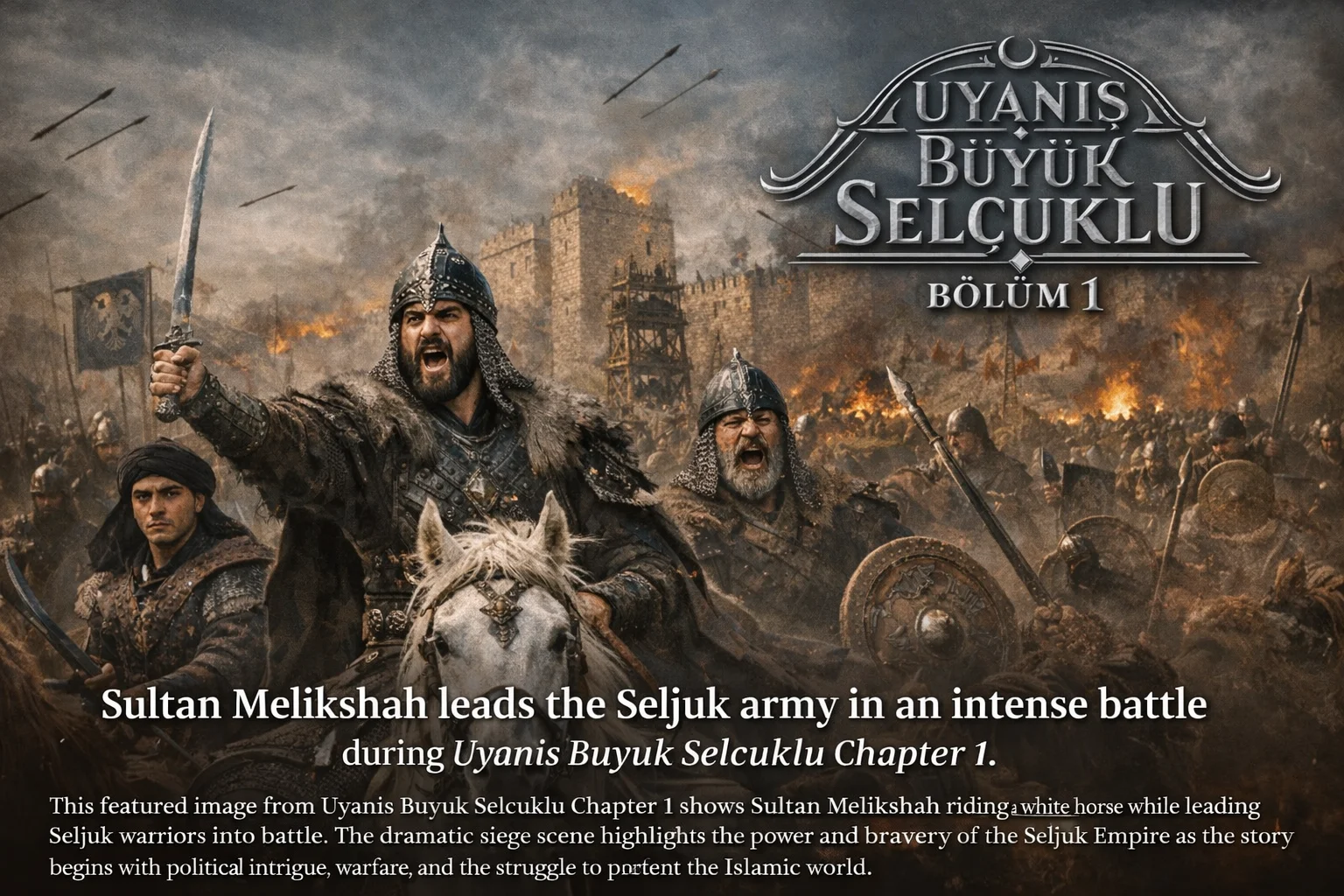
Uyanis Buyuk Selcuklu Chapter 1 – The Beginning of a Great Seljuk Legacy
Uyanis Buyuk Selcuklu Chapter 1 – The Beginning of a Great Seljuk Legacy
Uyanis Buyuk Selcuklu Chapter 1: Introduction
Uyanis Buyuk Selcuklu Chapter 1 opens the door to one of the most influential periods of medieval Islamic history. The story revolves around the Great Seljuk Empire, a powerful state that shaped politics, culture, and military strategy across the Middle East and Central Asia during the 11th century. This opening chapter sets the foundation for understanding the leadership of Sultan Melikşah and the challenges faced by the Seljuk administration in maintaining stability within a vast empire.
The narrative introduces viewers to a world where loyalty, intelligence, and strategy determine the fate of nations. The Seljuk Empire was not only known for its strong armies but also for its advanced governance and scholarship. Under the guidance of wise leaders such as the grand vizier Nizam al-Mulk, the empire flourished as a center of knowledge and justice.
In this chapter, the political atmosphere is tense. Internal conspiracies, rival factions, and external threats create an environment where the rulers must act carefully to protect the state. The opening moments focus on the delicate balance of power within the Seljuk court, highlighting how leadership decisions can influence the stability of the entire region.
Historical Background of the Seljuk Empire
The Seljuk Empire emerged from Turkic origins and gradually expanded into one of the largest Muslim empires of its time. By the period depicted in Uyanis Buyuk Selcuklu Chapter 1, the empire had already established control over vast territories stretching from Central Asia to parts of the Middle East.
Key Facts About the Seljuk Empire
| Aspect | Details |
|---|---|
| Empire Name | Great Seljuk Empire |
| Era | 11th Century |
| Capital | Isfahan |
| Ruler | Sultan Melikşah |
| Grand Vizier | Nizam al-Mulk |
| Known For | Administration, education system, military power |
The Seljuks played a major role in strengthening Islamic civilization. They promoted scholarship and established institutions known as Nizamiyya madrasas, which became important centers of education. These institutions trained scholars, administrators, and legal experts who later influenced the intellectual life of the Islamic world.
The political structure of the empire was based on a strong central authority supported by regional governors and advisors. However, maintaining unity across such a large territory was never easy. Rival groups constantly sought to challenge Seljuk authority.
The Rise of Sultan Melikşah
One of the most prominent figures introduced in Uyanis Buyuk Selcuklu Chapter 1 is Sultan Melikşah. His rule marked the golden age of the Seljuk Empire. Known for his wisdom and leadership skills, Melikşah inherited a vast empire and worked tirelessly to maintain peace and prosperity.
“A ruler’s strength lies not only in his army but in his ability to maintain justice.”
This philosophy reflects the governing style associated with Melikşah. Rather than relying solely on military force, he emphasized fairness, diplomacy, and the support of capable advisors.
The opening chapter portrays Melikşah as a ruler who understands the complexity of governing a diverse empire. His decisions are guided by the interests of the state, even when faced with difficult choices.
The Role of Nizam al-Mulk
Another key figure highlighted early in the story is Nizam al-Mulk, the legendary grand vizier. Known for his intelligence and administrative brilliance, he served as the backbone of the Seljuk government.
Nizam al-Mulk believed in building a strong state through education and organization. His famous work, Siyasatnama (Book of Government), described the principles of effective leadership and governance.
Contributions of Nizam al-Mulk
- Establishment of the Nizamiyya educational institutions
- Strengthening administrative systems
- Advising the Sultan on political strategy
- Promoting justice and stability
His presence in the narrative emphasizes the importance of knowledge and wisdom in maintaining political order.
The Political Environment of the Era
Uyanis Buyuk Selcuklu Chapter 1 presents an environment filled with uncertainty and hidden rivalries. Powerful groups compete for influence within the empire, and conspiracies threaten the stability of the Seljuk state.
The Seljuk court was a place where diplomacy and intelligence were as important as military strength. Leaders had to remain alert to protect the empire from internal unrest.
Major Challenges Faced by the Seljuks
- Internal political rivalries
- External threats from neighboring powers
- Maintaining unity across diverse territories
- Preventing secret conspiracies against the state
These challenges form the backbone of the story and illustrate how fragile even a powerful empire can be.
The Importance of Knowledge and Scholarship
One of the defining features of the Seljuk era was its emphasis on education and intellectual development. The Seljuks supported scholars, scientists, and philosophers who contributed significantly to the advancement of knowledge.
Institutions like the Nizamiyya madrasas played a crucial role in educating future leaders and scholars. These institutions promoted the study of law, theology, mathematics, and philosophy.
This focus on knowledge helped strengthen the cultural and intellectual identity of the Seljuk Empire.
Education was seen as a pillar of stability, ensuring that future generations would continue to uphold justice and wisdom.
Military Strength of the Seljuk Empire
Although governance and scholarship were important, the Seljuks also maintained a powerful military system. Their armies were known for discipline, strategy, and mobility.
The Seljuk military relied heavily on skilled cavalry forces, which allowed them to move quickly across large territories. This strategic advantage helped them maintain control over their vast empire.
Key Features of the Seljuk Military
- Highly mobile cavalry units
- Strong defensive strategies
- Experienced commanders
- Organized military structure
These elements ensured that the empire could defend its borders and maintain order.
Cultural and Social Life
Beyond politics and governance, the Seljuk period was also rich in culture and social development. Cities flourished as centers of trade, art, and architecture.
Markets, libraries, and educational institutions contributed to the vibrant life of the empire. Scholars, poets, and scientists found support within Seljuk society.
The cultural achievements of this period left a lasting legacy that influenced later Islamic civilizations.
Why Chapter 1 Is Important for the Story
The opening chapter is essential because it introduces the major characters and themes that shape the rest of the narrative. It establishes the political tensions and historical background necessary to understand the Seljuk world.
Key elements introduced include:
- The leadership of Sultan Melikşah
- The wisdom of Nizam al-Mulk
- Political rivalries within the empire
- The broader historical setting
By presenting these elements early, the story builds a strong foundation for future developments.
The Historical Significance of the Seljuks
The Seljuk Empire played a crucial role in shaping medieval history. Their influence extended across politics, culture, education, and military strategy.
Many historians consider the Seljuk era a turning point in the development of Islamic governance. Their administrative models and educational institutions inspired later empires.
Even today, the legacy of the Seljuks remains visible in historical architecture, literature, and scholarship.
Key Takeaways
- Uyanis Buyuk Selcuklu Chapter 1 introduces the Seljuk Empire and its leadership.
- Sultan Melikşah represents strong and balanced governance.
- Nizam al-Mulk played a vital role in administration and education.
- The Seljuks faced both internal rivalries and external challenges.
- Education and scholarship were central to Seljuk society.
- The Seljuk military ensured the empire’s stability and protection.
Conclusion
Uyanis Buyuk Selcuklu Chapter 1 serves as a powerful introduction to the world of the Great Seljuk Empire. Through the portrayal of influential leaders like Sultan Melikşah and Nizam al-Mulk, the narrative highlights the importance of wisdom, justice, and strategic leadership in maintaining a strong state.
The chapter not only introduces historical figures but also presents the complex political environment of the 11th century. It reveals how leadership, education, and unity played vital roles in shaping the Seljuk legacy.
For history enthusiasts, this chapter provides valuable insight into the rise of one of the most remarkable empires of the medieval Islamic world.
FAQ
The main focus of Uyanis Buyuk Selcuklu Chapter 1 is introducing the Seljuk Empire, Sultan Melikşah, and the political challenges faced by the state.
In Uyanis Buyuk Selcuklu Chapter 1, Sultan Melikşah represents strong leadership and plays a key role in maintaining stability within the empire.
Uyanis Buyuk Selcuklu Chapter 1 introduces Nizam al-Mulk as the wise grand vizier who helped organize the Seljuk administration and educational system.
Uyanis Buyuk Selcuklu Chapter 1 is set during the 11th century when the Great Seljuk Empire was one of the most powerful states in the Islamic world.
Uyanis Buyuk Selcuklu Chapter 1 establishes the historical background, leadership structure, and political tensions that shaped the Seljuk Empire.