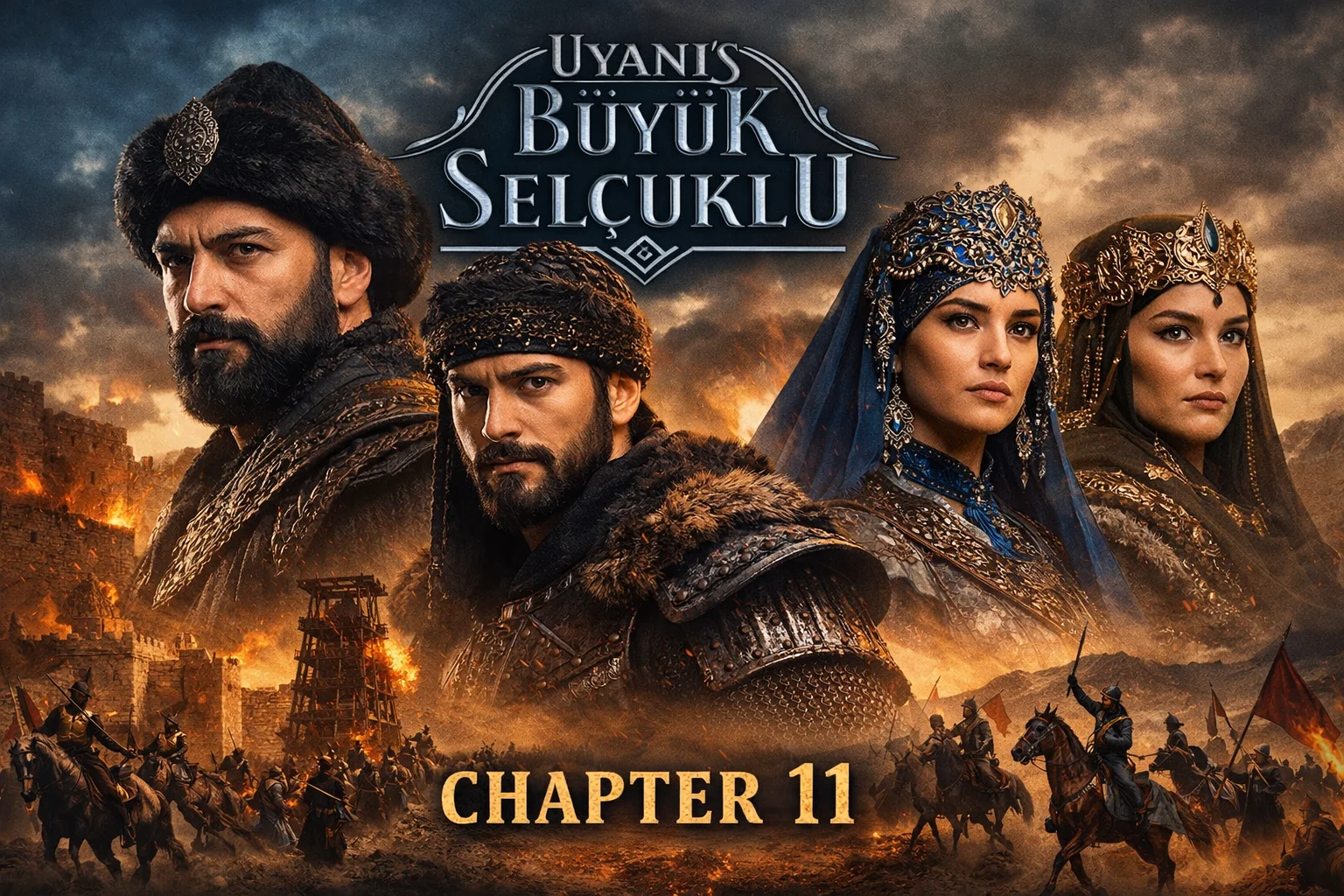
Uyanis Buyuk Selcuklu Chapter 11 – Power, Strategy, and the Strength of the Seljuk Empire
Uyanis Buyuk Selcuklu Chapter 11 – Power, Strategy, and the Strength of the Seljuk Empire
Uyanis Buyuk Selcuklu Chapter 11: Introduction
The historical drama Uyanis Buyuk Selcuklu presents the powerful story of the Seljuk Empire and its leaders who shaped medieval Islamic history. Uyanis Buyuk Selcuklu Chapter 11 continues this remarkable journey by focusing on political strategy, loyalty, and the constant struggle to protect the empire from internal conspiracies and external enemies. The Seljuk state during this period was one of the most influential powers in the Muslim world, controlling vast territories and maintaining a delicate balance between governance, military strength, and diplomacy.
In this chapter of the story, the narrative highlights the responsibilities of leadership and the challenges faced by Sultan Melikshah, one of the most respected rulers of the Seljuk dynasty. His leadership demonstrates the qualities of wisdom, patience, and determination that were required to maintain stability in a vast empire. At the same time, the story reveals how powerful states often faced dangers not only from foreign rivals but also from hidden threats within their own borders.
The Political Climate of the Seljuk Empire
The Seljuk Empire in the eleventh century was a vast and complex political structure. From Anatolia to Persia, the empire included different cultures, tribes, and political interests. Uyanis Buyuk Selcuklu Chapter 11 reflects this diversity by showing how rulers had to manage multiple alliances while preventing rebellions and conspiracies.
The Seljuk administration relied on a sophisticated system of governance that included military commanders, scholars, and advisors. Among these advisors, the famous Nizam al-Mulk played a crucial role in maintaining order within the empire. His political wisdom helped the Seljuk leadership navigate difficult situations and maintain unity across distant provinces.
A key aspect of Seljuk governance was the balance between strength and justice. Leaders were expected to show authority while also protecting the welfare of their people. This balance is often emphasized in historical narratives about the Seljuks, illustrating why their rule was respected across many regions of the Islamic world.
Sultan Melikshah and the Burden of Leadership
One of the central figures highlighted in Uyanis Buyuk Selcuklu Chapter 11 is Sultan Melikshah. His character represents the ideal medieval ruler: courageous in times of danger yet thoughtful in matters of governance. Throughout the story, he faces difficult decisions that require both strategic thinking and moral judgment.
Melikshah’s leadership reflects the challenges faced by rulers in large empires. Every decision could influence the stability of the state, the loyalty of the army, and the safety of the population. The narrative demonstrates that ruling an empire was not simply about military strength; it also required intelligence, patience, and the ability to recognize hidden threats.
One of the memorable themes associated with Melikshah is the idea that true leadership is measured by responsibility rather than power. His actions show how rulers had to think beyond personal ambitions and focus on the long-term future of the empire.
The Role of Scholars and Advisors
Another important theme explored in this chapter is the influence of scholars and advisors within the Seljuk administration. The Seljuk rulers understood that knowledge was essential for governing a vast and diverse empire. Scholars were respected not only for their learning but also for their ability to guide rulers in complex political situations.
Nizam al-Mulk, often portrayed as a wise and strategic advisor, symbolizes the importance of knowledge in leadership. His political insights and understanding of statecraft helped shape the administrative structure of the Seljuk Empire. His famous work Siyasatnama is still considered an important historical document on governance.
In Uyanis Buyuk Selcuklu Chapter 11, the relationship between ruler and advisor demonstrates how cooperation between leadership and scholarship created stability within the empire. This collaboration between power and wisdom became one of the defining characteristics of Seljuk rule.
Military Strength and Defense of the Empire
The Seljuk Empire expanded and survived largely due to its disciplined military forces. Warriors were trained not only in combat but also in loyalty to the state. In historical narratives, Seljuk fighters are often depicted as courageous defenders of their homeland.
In Uyanis Buyuk Selcuklu Chapter 11, military strategy plays a key role in protecting the empire from external threats. The story highlights how commanders and soldiers worked together to defend borders and maintain order across distant regions.
The Seljuk army was known for its mobility and tactical skill. Mounted archers and experienced commanders allowed the empire to respond quickly to challenges. These military strategies helped the Seljuks maintain control over vast territories for many years.
Internal Challenges and Hidden Threats
Every powerful empire faces internal challenges, and the Seljuk state was no exception. Rivalries, political ambitions, and secret alliances sometimes created instability within the court. Uyanis Buyuk Selcuklu Chapter 11 explores how such tensions could threaten even the strongest states.
The narrative suggests that internal conflicts were often more dangerous than external enemies. When leaders had to deal with hidden conspiracies or divided loyalties, the stability of the entire empire could be at risk. Maintaining unity therefore became one of the most important responsibilities of the Seljuk leadership.
These challenges reveal a universal truth about history: strong leadership must constantly guard against both visible and hidden dangers.
Cultural and Intellectual Life in the Seljuk Era
Beyond politics and military affairs, the Seljuk period was also known for cultural and intellectual achievements. Cities under Seljuk rule became centers of learning, attracting scholars, poets, and scientists from different parts of the Islamic world.
Madrasas, libraries, and scholarly gatherings played a major role in spreading knowledge during this time. The Seljuk rulers supported education and scholarship because they believed that a strong intellectual foundation strengthened society.
In historical storytelling related to Uyanis Buyuk Selcuklu Chapter 11, this cultural environment helps explain why the Seljuk Empire left such a lasting legacy in Islamic civilization.
Diplomacy and Alliances
Diplomacy was another important element of Seljuk statecraft. Maintaining alliances with neighboring powers often prevented conflicts and helped stabilize the region. Skilled diplomats represented the empire in negotiations and ensured that Seljuk interests were protected.
The ability to combine diplomacy with military strength allowed the Seljuks to maintain influence across a wide geographic area. This balance between negotiation and readiness for conflict was a hallmark of Seljuk strategy.
In the narrative of Uyanis Buyuk Selcuklu Chapter 11, diplomacy is portrayed as a powerful tool that complements the authority of the ruler and the strength of the army.
Themes of Loyalty and Honor
One of the most powerful messages within the story is the importance of loyalty and honor. Warriors, advisors, and citizens were expected to remain faithful to the state and its leadership. Betrayal was considered a serious threat because it could weaken the foundations of the empire.
Loyalty in Seljuk society was not only political but also moral. It reflected the values of trust, responsibility, and commitment to the greater good. Characters in the narrative often struggle with difficult choices, showing how personal decisions can influence the fate of an entire state.
These themes make the story not only historically interesting but also emotionally engaging for readers who appreciate tales of courage and dedication.
Historical Legacy of the Seljuk Empire
The Seljuk Empire played a crucial role in shaping the political and cultural landscape of the medieval Middle East and Anatolia. Its administrative systems, educational institutions, and military strategies influenced later Islamic states.
The legacy of leaders like Sultan Melikshah and scholars like Nizam al-Mulk demonstrates how strong leadership combined with knowledge can create lasting achievements. Their contributions continue to be studied by historians who seek to understand the rise of powerful medieval civilizations.
Through the lens of Uyanis Buyuk Selcuklu Chapter 11, readers gain a deeper appreciation of the challenges and achievements that defined this remarkable period in history.
Table: Key Historical Figures in the Seljuk Era
| Figure | Role | Historical Importance |
|---|---|---|
| Sultan Melikshah | Seljuk ruler | Expanded and stabilized the empire |
| Nizam al-Mulk | Grand Vizier | Architect of Seljuk administrative system |
| Seljuk Warriors | Military defenders | Protected and expanded the empire |
| Scholars and Teachers | Educators | Spread knowledge and culture |
Key Takeaways
- The Seljuk Empire was one of the most powerful states of the medieval Islamic world.
- Leadership under Sultan Melikshah emphasized justice, strength, and responsibility.
- Advisors such as Nizam al-Mulk played a vital role in shaping governance.
- Military organization helped protect the empire from external threats.
- Cultural and intellectual development flourished during Seljuk rule.
Conclusion
Uyanis Buyuk Selcuklu Chapter 11 offers a fascinating look into the political struggles, leadership challenges, and cultural achievements of the Seljuk Empire. The story highlights how powerful states depended on wise rulers, loyal warriors, and knowledgeable advisors. Together, these elements created a strong foundation that allowed the Seljuks to influence the course of medieval history.
The chapter also reminds readers that history is not only about power and battles but also about ideas, leadership, and the values that guide societies. Through its portrayal of the Seljuk world, the narrative encourages a deeper appreciation of one of the most important civilizations of the medieval Islamic era.
FAQs (Yoast SEO Format)
The main theme of Uyanis Buyuk Selcuklu Chapter 11 focuses on leadership, political strategy, and the protection of the Seljuk Empire from internal and external threats.
In Uyanis Buyuk Selcuklu Chapter 11, Sultan Melikshah represents strong leadership and wise decision-making that helps maintain the stability of the Seljuk state.
In Uyanis Buyuk Selcuklu Chapter 11, Nizam al-Mulk serves as a trusted advisor whose knowledge and political insight guide the Seljuk leadership.
Uyanis Buyuk Selcuklu Chapter 11 teaches that unity, wisdom, and loyalty are essential for the survival of powerful states.
The historical setting of Uyanis Buyuk Selcuklu Chapter 11 highlights the Seljuk Empire’s influence on politics, culture, and education in the medieval Islamic world.