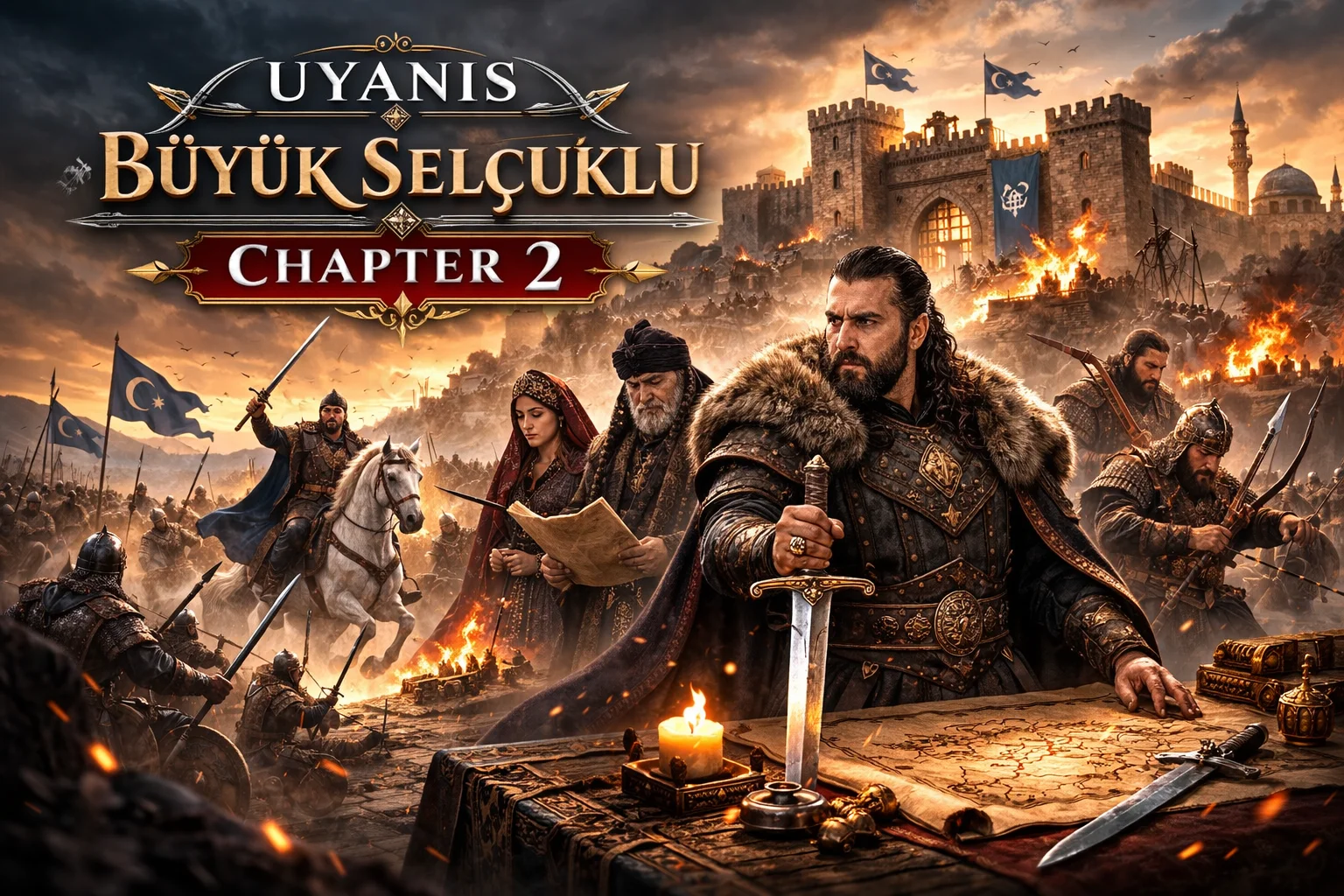
Uyanis Buyuk Selcuklu Chapter 2 – Power, Strategy and the Rise of a Great Empire
Uyanis Buyuk Selcuklu Chapter 2 – Power, Strategy and the Rise of a Great Empire
Uyanis Buyuk Selcuklu Chapter 2: Introduction
The historical narrative of Uyanis Buyuk Selcuklu Chapter 2 continues the fascinating journey into the world of the Great Seljuk Empire, one of the most influential powers in medieval Islamic history. The story unfolds during a time when leadership required not only courage but also wisdom, diplomacy, and strategic thinking. In this chapter, viewers are introduced to deeper political tensions within the empire as well as external threats that challenge the stability of the Seljuk state.
The Seljuk Empire during the reign of Sultan Melikşah was at its height, yet great empires often face internal rivalries and external conspiracies. Chapter 2 expands on the political atmosphere established earlier, revealing how the palace, the battlefield, and the scholarly world were closely connected. The narrative emphasizes how leadership in such a vast empire demanded constant vigilance and thoughtful governance.
The Expanding World of the Seljuk Empire
The Seljuk Empire stretched across vast territories covering parts of Central Asia, Persia, Anatolia, and the Middle East. This immense territory required careful administration and strong leadership. In Uyanis Buyuk Selcuklu Chapter 2, we see how the empire’s leaders manage the delicate balance between military strength and political diplomacy.
The chapter highlights the responsibilities of Sultan Melikşah as he governs a realm filled with diverse cultures, languages, and traditions. His court becomes a center of decision-making where generals, scholars, and advisors gather to shape the empire’s future. The story reflects the reality that medieval empires were not sustained by force alone but by administrative organization and intellectual leadership.
Key Figures in Chapter 2
Several important personalities play a central role in shaping the events of this chapter. Their actions influence both the political direction of the empire and the personal journeys of the characters.
| Character | Role in the Empire | Importance in Chapter 2 |
|---|---|---|
| Sultan Melikşah | Supreme ruler of the Seljuk Empire | Faces political challenges and strategic decisions |
| Nizamülmülk | Grand Vizier and statesman | Guides the empire with wisdom and administrative skill |
| Sencer | Young prince and rising leader | Begins to show signs of bravery and responsibility |
| Terken Hatun | Influential royal figure | Represents palace politics and power dynamics |
These figures demonstrate how leadership during the Seljuk period relied on both authority and intellect.
Palace Politics and Strategic Thinking
One of the most compelling aspects of Uyanis Buyuk Selcuklu Chapter 2 is the depiction of palace politics. The Seljuk court is not only a place of royal ceremonies but also a hub of strategy and negotiation. Advisors bring reports from distant regions while generals discuss security challenges.
Political alliances and rivalries become increasingly visible in this chapter. Certain individuals attempt to influence decisions within the palace, reminding viewers that power struggles were a natural part of imperial governance. These scenes reflect the complexities of medieval administration where trust, loyalty, and ambition shaped the destiny of entire regions.
The Role of Nizamülmülk
Among the most respected figures of the Seljuk era was Nizamülmülk, the Grand Vizier whose wisdom guided the empire through many challenges. Chapter 2 portrays him as a symbol of intellectual leadership and strategic planning.
Nizamülmülk’s historical legacy is significant. He was not only a political advisor but also a scholar who understood the importance of education and institutional stability. His influence is felt in the development of schools and scholarly centers that promoted learning across the empire.
“A state survives not by power alone, but by knowledge and justice.”
This idea reflects the philosophy associated with Nizamülmülk and explains why his role remains central in the narrative.
Strategic Challenges Facing the Empire
No empire remains stable without facing difficulties. In Uyanis Buyuk Selcuklu Chapter 2, the Seljuk leadership becomes aware of threats emerging from both internal and external forces.
Some of the major challenges include:
- Regional tensions along the empire’s borders
- Rival political factions seeking influence
- Diplomatic pressure from neighboring powers
- Maintaining unity within a vast territory
These issues highlight the importance of strategic thinking. Leaders must respond carefully to avoid instability while protecting the empire’s long-term interests.
Cultural and Intellectual Life of the Seljuk Period
Beyond politics and strategy, the Seljuk Empire was also a center of culture and intellectual development. Scholars, poets, and philosophers flourished under the patronage of rulers like Sultan Melikşah.
The narrative subtly introduces this cultural environment by showing gatherings of scholars and discussions about governance and philosophy. Education played a major role in shaping society, and institutions such as the famous Nizamiyya schools became important centers of learning in the medieval Islamic world.
These cultural elements remind viewers that the Seljuk Empire was not only powerful militarily but also influential intellectually.
Leadership and Responsibility
A recurring theme in Uyanis Buyuk Selcuklu Chapter 2 is the concept of leadership. The story emphasizes that ruling an empire requires discipline, patience, and foresight.
Young leaders within the narrative begin to understand the responsibilities associated with authority. Their experiences demonstrate that leadership is not inherited automatically; it must be earned through wisdom, courage, and dedication to the welfare of the people.
The chapter portrays leadership as a journey of growth where mistakes and challenges become learning opportunities.
Historical Context of the Seljuk Era
To fully appreciate the events depicted in this chapter, it is helpful to understand the broader historical background of the Seljuk Empire.
Key historical facts about the Seljuk period:
| Historical Element | Description |
|---|---|
| Time Period | 11th century |
| Major Regions | Persia, Anatolia, Central Asia, Middle East |
| Notable Leader | Sultan Melikşah |
| Influential Vizier | Nizamülmülk |
| Cultural Achievements | Development of educational institutions and scholarship |
The Seljuk Empire played a major role in shaping political and cultural developments across the Islamic world. Its influence extended into architecture, education, and governance.
Themes Reflected in Chapter 2
Several important themes emerge throughout Uyanis Buyuk Selcuklu Chapter 2. These themes reflect both historical realities and universal human experiences.
Important Themes
- Leadership and responsibility
- Political strategy and diplomacy
- Loyalty and trust within the court
- The balance between power and wisdom
- The importance of knowledge in governance
These themes contribute to the narrative’s depth and explain why stories from the Seljuk era continue to captivate audiences interested in history.
Key Takeaways
- The Seljuk Empire was one of the most powerful states of the medieval Islamic world.
- Sultan Melikşah’s leadership represents a period of stability and expansion.
- Nizamülmülk played a crucial role in shaping administrative and intellectual life.
- Political strategy and diplomacy were essential for managing a vast empire.
- Cultural and educational institutions flourished during the Seljuk period.
Conclusion
Uyanis Buyuk Selcuklu Chapter 2 provides a deeper exploration of the political and intellectual world of the Seljuk Empire. Through its portrayal of leadership, palace politics, and strategic decision-making, the narrative reveals how medieval rulers balanced power with wisdom.
The chapter also reminds us that history is shaped not only by rulers but also by advisors, scholars, and communities who contribute to the stability of a civilization. By presenting the complexities of governance and the importance of knowledge, the story reflects the enduring legacy of the Seljuk era.
For readers interested in history, this chapter serves as a window into the challenges and achievements of one of the most influential empires of the medieval world.
FAQ
Uyanis Buyuk Selcuklu Chapter 2 focuses on the 11th-century Seljuk Empire during the reign of Sultan Melikşah.
The central ruler in Uyanis Buyuk Selcuklu Chapter 2 is Sultan Melikşah, whose leadership shapes many political developments.
In Uyanis Buyuk Selcuklu Chapter 2, Nizamülmülk serves as the Grand Vizier who provides strategic guidance and administrative wisdom.
Uyanis Buyuk Selcuklu Chapter 2 explores themes such as leadership, political strategy, loyalty, and the role of knowledge in governance.
Uyanis Buyuk Selcuklu Chapter 2 highlights the Seljuk Empire’s influence on politics, education, and culture across the medieval Islamic world.