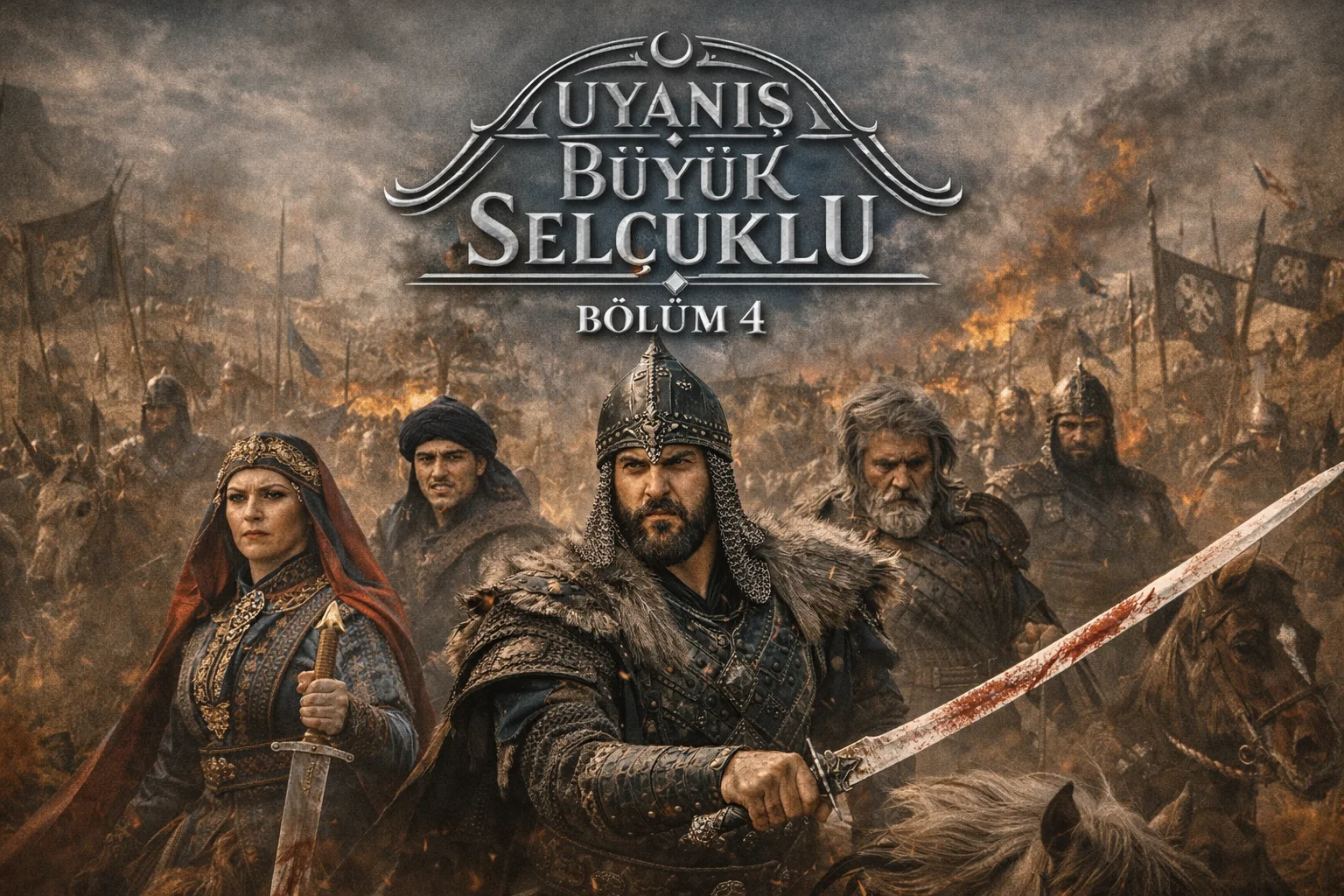
Uyanis Buyuk Selcuklu Chapter 4 – Power, Strategy, and Seljuk Legacy
Uyanis Buyuk Selcuklu Chapter 4 – Power, Strategy, and Seljuk Legacy
Uyanis Buyuk Selcuklu Chapter 4: Introduction
The Uyanis Buyuk Selcuklu Chapter 4 continues the dramatic exploration of the Great Seljuk Empire, focusing on leadership, loyalty, and the complex political landscape that defined the medieval Islamic world. The story unfolds during a time when the Seljuk state stood as one of the most powerful forces in the region, stretching across vast territories and influencing the course of history.
At the center of the narrative is Sultan Melikshah, a ruler known for his wisdom, authority, and determination to maintain unity within his empire. The chapter highlights the delicate balance between strength and diplomacy required to protect a large and diverse realm. Through powerful conversations and strategic planning, the story reveals the challenges faced by leaders who must guard both their borders and their inner circles.
This chapter also deepens the portrayal of the Seljuk court, where political alliances, rivalries, and hidden ambitions shape the direction of the empire. Advisors, scholars, and commanders each play a role in maintaining stability. Their discussions reflect the intellectual and administrative sophistication that made the Seljuk state one of the most respected powers of its era.
The Expanding Influence of the Seljuk Empire
During the period depicted in Uyanis Buyuk Selcuklu Chapter 4, the Seljuk Empire was not only a military power but also a center of culture, education, and governance. The rulers of the dynasty understood that maintaining authority required more than strength; it required a strong administrative structure and a shared sense of identity.
The Seljuks invested heavily in institutions of learning, most notably the famous Nizamiyya madrasas. These schools became centers for scholarship and intellectual growth, attracting scholars from across the Islamic world. Their presence strengthened the ideological and cultural foundations of the empire.
Meanwhile, the empire’s vast territories demanded constant attention. Governors, commanders, and advisors were responsible for maintaining order in distant provinces. Their loyalty was crucial, as any sign of division could create opportunities for external rivals.
“A great empire stands not only on swords but on wisdom and justice.”
This idea resonates strongly throughout the chapter, reminding viewers that the Seljuk rulers believed deeply in governance based on fairness and knowledge.
Sultan Melikshah’s Leadership
One of the most compelling aspects of Uyanis Buyuk Selcuklu Chapter 4 is its portrayal of Sultan Melikshah’s leadership style. Rather than ruling through fear alone, he seeks counsel from trusted advisors and carefully evaluates every decision before taking action.
Melikshah is depicted as a ruler who understands the weight of responsibility. Every command he gives has consequences not only for his court but also for the millions of people living under Seljuk authority. This awareness shapes his cautious and strategic approach to governance.
The chapter illustrates how Melikshah must balance authority with trust. While he relies on loyal commanders, he also remains vigilant against hidden threats within the palace. The constant tension between loyalty and betrayal adds depth to the narrative and reflects the reality of medieval political life
The Role of Nizam al-Mulk
Another key figure in the story is Nizam al-Mulk, the grand vizier whose wisdom and administrative skill helped shape the Seljuk state. His presence in the chapter highlights the importance of experienced advisors in maintaining stability.
Nizam al-Mulk was not merely a bureaucrat; he was a visionary who believed in structured governance and educational reform. His policies helped establish systems that would influence Islamic governance for generations.
In the chapter, his conversations reveal the careful planning behind Seljuk policies. He emphasizes patience, intelligence, and foresight qualities essential for managing an empire that spans multiple cultures and regions.
Political Tensions and Hidden Rivalries
As the story unfolds, Uyanis Buyuk Selcuklu Chapter 4 reveals the presence of internal rivalries within the Seljuk court. While many figures appear loyal on the surface, personal ambitions and ideological differences create subtle tensions.
Political intrigue has always been part of imperial life. The Seljuk court, filled with powerful individuals, is no exception. Each noble and commander carries his own goals and loyalties, sometimes aligning with the state and sometimes diverging from it.
These rivalries create an atmosphere where every decision must be carefully considered. Even small misunderstandings can grow into larger conflicts if not handled wisely.
Strategic Defense and Military Organization
The Seljuk Empire’s strength depended greatly on its well-organized military structure. In Uyanis Buyuk Selcuklu Chapter 4, viewers witness the preparation and planning that ensured the empire’s security.
Seljuk commanders were responsible for protecting trade routes, defending cities, and maintaining order across distant territories. Their discipline and strategic thinking played a crucial role in safeguarding the empire.
The chapter highlights how leaders discuss potential threats and evaluate their options carefully. This emphasis on planning reflects the Seljuks’ reputation for combining military skill with strategic intelligence.
Cultural and Intellectual Achievements
Beyond political and military matters, Uyanis Buyuk Selcuklu Chapter 4 also touches upon the cultural achievements of the Seljuk period. The empire served as a bridge between different civilizations, encouraging the exchange of knowledge and ideas.
Architecture, literature, and science flourished during this era. Cities such as Nishapur and Isfahan became centers of learning and artistic expression. Scholars wrote influential works on theology, philosophy, mathematics, and medicine.
This intellectual atmosphere contributed to the empire’s stability by fostering a shared cultural identity. Education and scholarship helped strengthen the moral and ideological foundations of Seljuk society.
The Importance of Loyalty
One of the most powerful themes in Uyanis Buyuk Selcuklu Chapter 4 is loyalty. Throughout the narrative, characters are tested by circumstances that challenge their commitment to the state and to their leaders.
Loyalty was considered a fundamental virtue in medieval governance. Commanders, advisors, and soldiers were expected to place the welfare of the empire above personal ambition.
However, the chapter also acknowledges that loyalty must be earned. Leaders must demonstrate fairness and wisdom if they wish to inspire genuine devotion from their followers.
Key Historical Elements in the Chapter
| Element | Description |
|---|---|
| Seljuk Leadership | Focus on the authority and responsibility of Sultan Melikshah |
| Political Strategy | Careful planning to maintain unity and stability |
| Role of Advisors | Influence of experienced figures like Nizam al-Mulk |
| Cultural Growth | Expansion of education and scholarship |
| Imperial Challenges | Internal rivalries and external pressures |
Major Themes Highlighted
- Leadership and responsibility
- Loyalty and trust within the court
- Strategic thinking in governance
- Cultural and intellectual development
- Unity within a vast empire
Key Takeaways
- Uyanis Buyuk Selcuklu Chapter 4 emphasizes the complexity of ruling a powerful empire.
- Sultan Melikshah’s leadership reflects a balance between strength and wisdom.
- The influence of advisors such as Nizam al-Mulk highlights the importance of structured governance.
- Cultural and educational institutions played a major role in strengthening Seljuk society.
- Political rivalries within the court add depth to the narrative and mirror real historical challenges.
Conclusion
Uyanis Buyuk Selcuklu Chapter 4 presents a compelling look into the world of the Seljuk Empire, combining historical inspiration with dramatic storytelling. The chapter explores how leaders navigated political tension, managed vast territories, and relied on trusted advisors to maintain stability.
Through its focus on leadership, loyalty, and cultural development, the narrative reflects the broader legacy of the Seljuks. Their contributions to governance, education, and intellectual life left a lasting impact on the Islamic world and beyond.
Ultimately, the story reminds us that the strength of an empire lies not only in its armies but also in its wisdom, unity, and commitment to justice.
FAQs
Uyanis Buyuk Selcuklu Chapter 4 focuses on the leadership of Sultan Melikshah, the strategic decisions within the Seljuk court, and the challenges faced while maintaining imperial stability.
In Uyanis Buyuk Selcuklu Chapter 4, Sultan Melikshah represents wise leadership and responsible governance, guiding the empire through political tensions and strategic challenges.
Uyanis Buyuk Selcuklu Chapter 4 highlights Nizam al-Mulk as a trusted advisor who provides strategic guidance and administrative wisdom to strengthen the Seljuk state.
The themes in Uyanis Buyuk Selcuklu Chapter 4 include leadership, loyalty, political strategy, cultural growth, and the importance of unity within the Seljuk Empire.