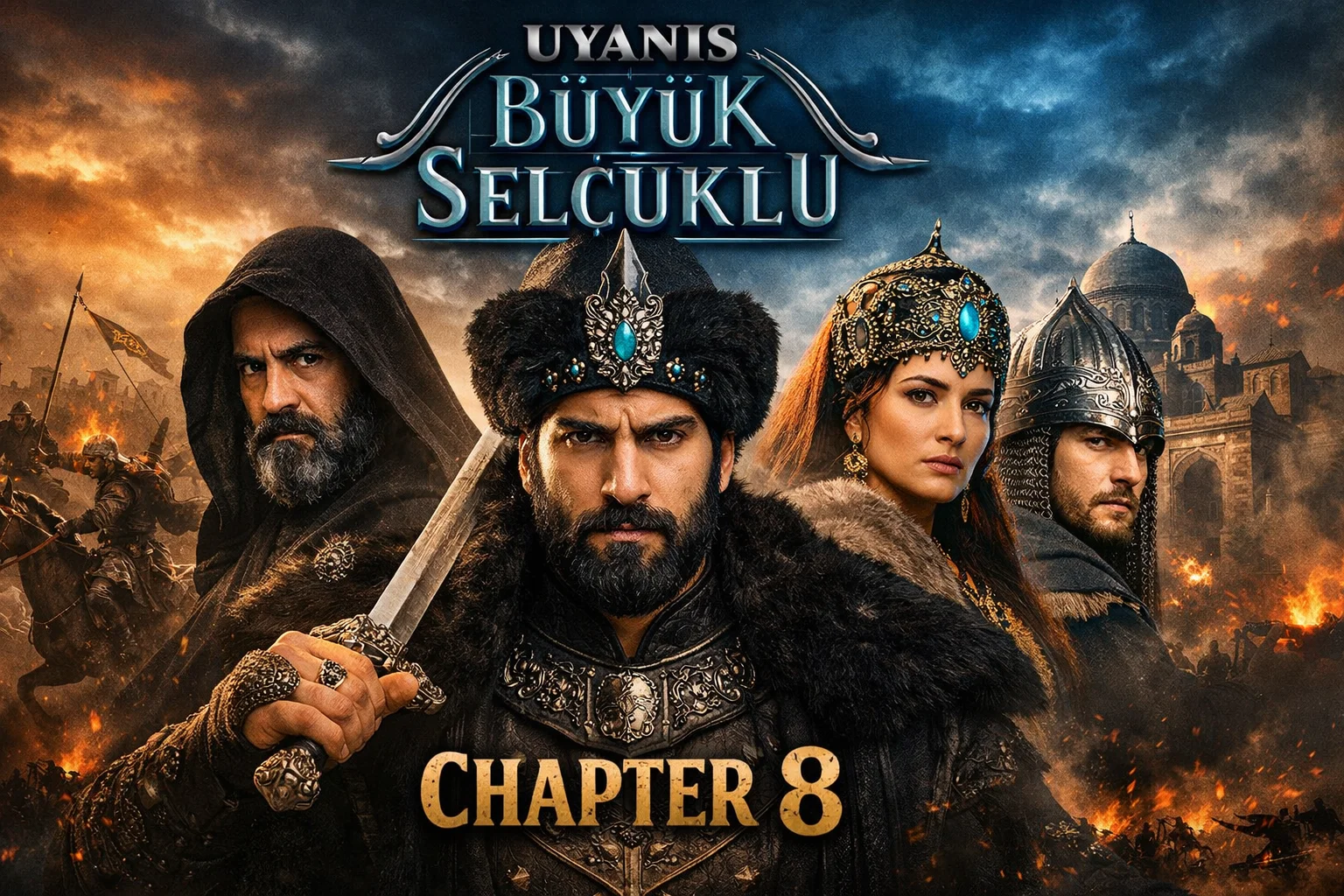
Uyanis Buyuk Selcuklu Chapter 8 – Power, Strategy, and the Seljuk Legacy
Uyanis Buyuk Selcuklu Chapter 8 scene showing Sultan Melikshah planning a strategy with Seljuk commanders
Uyanis Buyuk Selcuklu Chapter 8 – Strategy, Power, and the Rise of Seljuk Authority
Introduction: The Expanding World of the Seljuk Empire
Uyanis Buyuk Selcuklu Chapter 8 presents another powerful chapter in the dramatic depiction of the Seljuk Empire’s political landscape. The story continues to explore the delicate balance between loyalty, leadership, and ambition within one of the most influential Turkic dynasties in medieval Islamic history. The Seljuk state during the reign of Sultan Melikshah represented a vast political structure that stretched across large regions of the Middle East and Central Asia. In this chapter, the narrative deepens its focus on court politics, strategic thinking, and the hidden threats that constantly surround powerful rulers. Rather than presenting simple heroic moments, the chapter carefully portrays the complicated realities of governance, where every decision carries consequences for the stability of the empire.
The storyline emphasizes how leadership in such a vast state required more than military strength. Wisdom, patience, and careful diplomacy played equally important roles. Within the Seljuk palace, advisers, commanders, and scholars all contributed to shaping the direction of the empire. Their interactions highlight how medieval Islamic courts functioned as centers of political planning and intellectual discussion. Through these developments, Uyanis Buyuk Selcuklu Chapter 8 demonstrates how the Seljuk rulers maintained control over a diverse population while confronting internal challenges.
Political Intrigue Inside the Seljuk Court
The Seljuk palace has always been a place where alliances and rivalries evolve quietly behind magnificent walls. In Uyanis Buyuk Selcuklu Chapter 8, these dynamics become even more intense as different figures attempt to strengthen their influence within the state. Court politics in the Seljuk era were rarely straightforward. Powerful families, regional governors, and trusted commanders all sought positions that would allow them to guide the empire’s future.
Sultan Melikshah stands at the center of this complicated environment. His responsibility is not only to lead armies but also to maintain harmony among ambitious individuals who serve the empire. At times, the greatest threats to stability emerge not from distant enemies but from internal disagreements among influential figures. This chapter highlights how the Seljuk leadership carefully navigated such situations through discussion, strategic appointments, and careful observation of loyalty.
A memorable moment in the narrative reflects this challenge:
“A ruler’s greatest strength is not the sword he carries, but the wisdom with which he understands those around him.”
Such reflections emphasize the intellectual and moral dimensions of leadership during the Seljuk period.
The Role of Sultan Melikshah in Strengthening the Empire
Sultan Melikshah remains one of the most respected figures in Seljuk history. His rule represented a golden age marked by stability, expansion, and cultural growth. In Uyanis Buyuk Selcuklu Chapter 8, his character is portrayed as a thoughtful leader who understands the complexity of ruling a large empire.
Melikshah’s leadership style combined decisive action with consultation. He frequently relied on experienced advisers and scholars to guide important decisions. This collaborative approach helped the Seljuk administration manage vast territories and maintain order across different regions. The chapter demonstrates how Melikshah balanced firmness with fairness, ensuring that justice remained a central principle of governance.
The ruler’s presence also symbolizes unity for the Seljuk people. His ability to inspire loyalty among commanders and citizens alike shows why his reign is remembered as a defining period in Seljuk history.
Strategic Planning and Defense of the Realm
Every powerful empire must remain vigilant against potential threats. Uyanis Buyuk Selcuklu Chapter 8 illustrates how the Seljuk leadership constantly evaluated possible dangers while preparing strategies to defend their lands. Intelligence networks, border fortifications, and careful planning were essential tools used by Seljuk commanders.
The Seljuks were known for their tactical discipline and mobility. Their armies combined traditional Turkic cavalry techniques with structured military organization. This combination allowed them to respond quickly to emerging challenges while maintaining control over distant regions.
Key elements of Seljuk strategic planning included:
- Strong communication between regional commanders
- Rapid mobilization of cavalry units
- Careful monitoring of frontier territories
- Strategic alliances with neighboring powers
These measures ensured that the Seljuk state remained prepared for any unexpected developments.
Influence of Scholars and Advisers
Another important theme in Uyanis Buyuk Selcuklu Chapter 8 is the influence of intellectual figures within the Seljuk court. The Seljuk Empire was not only a military power but also a center of learning and scholarship. Scholars, jurists, and administrators played vital roles in shaping state policy.
One of the most influential figures associated with the Seljuk administration was the famous vizier Nizam al-Mulk, whose ideas about governance and justice shaped the political culture of the empire. Although the chapter focuses primarily on narrative developments, it also reflects the broader intellectual environment of the Seljuk court.
These scholars promoted principles such as justice, education, and responsible governance. Their guidance helped rulers understand the long-term consequences of political decisions. This relationship between rulers and scholars created a stable administrative system that allowed the Seljuk Empire to flourish.
Key Figures Appearing in the Chapter
| Character | Role in the Seljuk State | Historical Significance |
|---|---|---|
| Sultan Melikshah | Supreme ruler of the Seljuk Empire | Led the empire during its peak |
| Nizam al-Mulk | Grand Vizier and adviser | Architect of Seljuk administrative reforms |
| Seljuk Commanders | Military leaders | Responsible for protecting borders |
| Palace Officials | Administrative figures | Managed governance and internal order |
These figures represent the diverse leadership structure that allowed the Seljuk Empire to function effectively.
Themes of Loyalty and Responsibility
Throughout Uyanis Buyuk Selcuklu Chapter 8, the concept of loyalty emerges as a central theme. In medieval empires, loyalty determined the stability of the entire political system. Leaders relied heavily on trusted companions who could carry out their responsibilities with honesty and courage.
However, loyalty was constantly tested by ambition and personal interests. This tension creates dramatic moments within the narrative while also reflecting real historical challenges faced by rulers. Maintaining trust among powerful individuals required careful judgment and wise leadership.
The chapter portrays loyalty not simply as obedience but as a moral commitment to the well-being of the state.
Cultural and Historical Significance of the Seljuk Era
The Seljuk period represents a crucial stage in the development of Islamic civilization. During their rule, trade routes expanded, cities flourished, and educational institutions gained prominence. Uyanis Buyuk Selcuklu Chapter 8 indirectly highlights these achievements by portraying a sophisticated court culture filled with scholars, diplomats, and military leaders.
Some notable contributions of the Seljuk era include:
- Establishment of educational institutions such as madrasas
- Expansion of trade across the Silk Road
- Architectural developments in mosques and public buildings
- Administrative systems that influenced later Muslim states
These achievements demonstrate why historians often consider the Seljuk period a transformative era in Middle Eastern history.
Leadership Lessons from the Seljuk Narrative
The narrative of Uyanis Buyuk Selcuklu Chapter 8 also offers valuable lessons about leadership that remain relevant even today. Effective leadership requires a combination of courage, wisdom, and the ability to listen to trusted advisers.
Important leadership principles reflected in the chapter include:
- Strategic patience when facing complex challenges
- Consultation with knowledgeable advisers
- Fair treatment of subjects and officials
- Commitment to justice and stability
These principles helped the Seljuk rulers maintain authority over a vast and diverse empire.
The Continuing Legacy of the Seljuk Empire
Even centuries after the Seljuk era, their influence continues to shape historical discussions about governance and culture in the Islamic world. The administrative traditions they established later inspired the Ottoman Empire and other regional states. By exploring the lives of Seljuk leaders and their struggles, narratives like Uyanis Buyuk Selcuklu Chapter 8 help modern audiences understand the complexities of medieval history.
The chapter highlights how the strength of an empire depended not only on armies but also on wise governance, intellectual engagement, and strong moral values. These elements combined to create a political system that left a lasting mark on history.
Key Takeaways
- The Seljuk Empire was one of the most influential Turkic dynasties in medieval history.
- Uyanis Buyuk Selcuklu Chapter 8 explores political strategy and leadership challenges.
- Sultan Melikshah’s rule symbolizes stability and administrative strength.
- Scholars and advisers played important roles in shaping Seljuk governance.
- Loyalty and strategic planning were essential for maintaining imperial unity.
Conclusion
Uyanis Buyuk Selcuklu Chapter 8 continues to expand the historical narrative surrounding the Seljuk Empire by focusing on leadership, strategy, and internal political dynamics. Through its portrayal of Sultan Melikshah and his court, the chapter provides insight into how medieval empires managed power, loyalty, and governance. The Seljuk state thrived because it combined military strength with intellectual guidance and administrative organization.
By examining the personalities and decisions within the Seljuk court, readers gain a deeper appreciation for the complexities of medieval political life. The chapter ultimately reminds us that the legacy of the Seljuk Empire lies not only in its territorial achievements but also in its commitment to knowledge, justice, and wise leadership.
FAQ
Uyanis Buyuk Selcuklu Chapter 8 mainly explores political strategy, leadership challenges, and the responsibilities of Sultan Melikshah in maintaining Seljuk stability.
In Uyanis Buyuk Selcuklu Chapter 8, Sultan Melikshah represents wise leadership and strategic thinking that helped strengthen the Seljuk Empire.
Uyanis Buyuk Selcuklu Chapter 8 highlights themes such as loyalty, governance, political planning, and the importance of scholars within the Seljuk court.
Uyanis Buyuk Selcuklu Chapter 8 reflects Seljuk history by portraying the administrative structure, leadership decisions, and strategic planning of the empire.